El Bar de Chavela
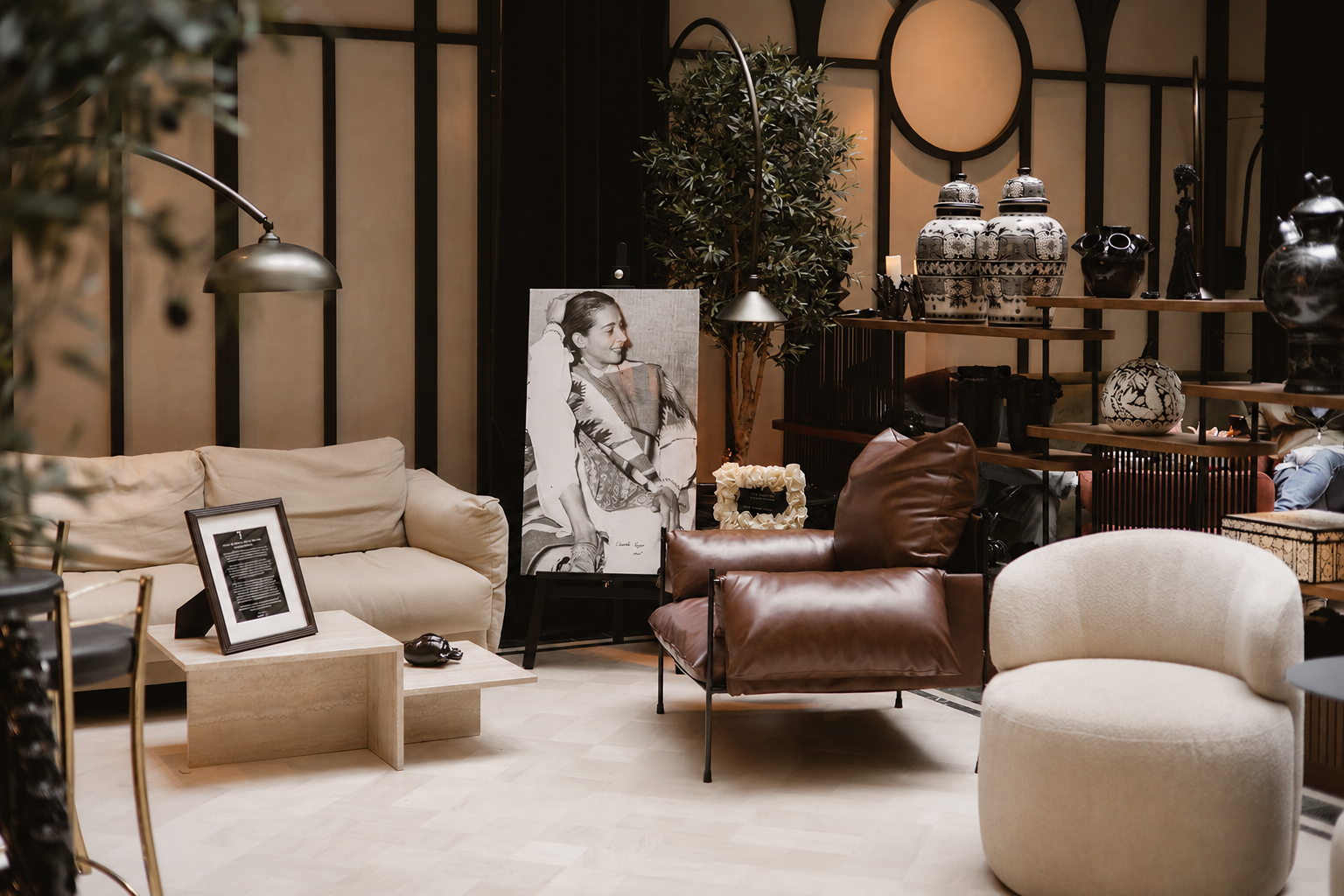
El Bar de Chavela: A Tribute to Freedom at Tótem Madrid’s Day of the Dead Altar
Some people leave a legacy that lives on long after their voices fall silent. It lingers in songs, in the objects they once treasured and in the memories of those who found in them a different way of looking at life. Chavela Vargas was one of those rare individuals.
This autumn, Tótem Madrid dedicates a new edition of its Day of the Dead Altar to the artist who made freedom her defining principle. Entitled El Bar de Chavela, the hotel’s lobby becomes a setting where Mexican culture, music, design and personal memories come together to honour a woman who never felt the need to conform.
On display from 20 October to 4 November 2026, the installation has been conceived by Mexican designer and jeweller Daniel Espinosa, in collaboration with Huakal and Casa Chavela.
Day of the Dead: The Art of Celebrating Memory
In Mexico, remembering those who are no longer with us is also a way of celebrating life. Each year, Día de Muertos brings families and communities together around altars that preserve stories, affection and traditions passed down through generations.
Flowers, candles, photographs and personal belongings take on a particular significance. They become gestures of welcome, expressions of affection and reminders of those whose presence is still deeply felt.
Rather than viewing death solely through the lens of absence, this tradition offers a more intimate relationship with memory. A celebration in which emotion, beauty and the joy of remembrance exist side by side.
For several years, Tótem Madrid has embraced this Mexican tradition as an opportunity to bring different cultural expressions to the Salamanca neighbourhood. Each edition remains faithful to the spirit of Día de Muertos while introducing a distinctive artistic perspective, opening up new conversations between past and present.
This year, that conversation centres on Chavela Vargas.
Chavela Vargas: The Freedom to Be Herself
Born in Costa Rica, Chavela Vargas found a sense of belonging in Mexico. It was there that she built a musical career that challenged the conventions of her time and forever changed the way ranchera music was performed.
With her deep, unmistakable voice, signature poncho and an understated stage presence, Chavela Vargas made every performance an expression of authenticity.
She sang of love, loss and longing without concealing vulnerability. In a musical tradition historically dominated by men, she found a language entirely her own, refusing to shape her identity around the expectations of others.
Her individuality extended far beyond the stage. Her close relationship with Frida Kahlo forms part of a shared history between two women who regarded art as an intensely personal form of expression.
In Spain, Chavela forged friendships and artistic connections that became an important chapter in her life. Pedro Almodóvar helped introduce her to new generations, while Joaquín Sabina dedicated Por el bulevar de los sueños rotos to her, a song that remains closely associated with her memory.
Her influence transcends musical genres, countries and generations. Perhaps because, beyond her extraordinary talent, Chavela represented something profoundly universal: the courage to live according to one’s own convictions.
El Bar de Chavela: A Story Told Through Design
A bar can be many things. The setting for an unexpected conversation, the backdrop to a song or a place where people come together to share a moment.
This is the idea behind El Bar de Chavela, the interpretation conceived by Mexican designer and jeweller Daniel Espinosa for Tótem Madrid’s Day of the Dead Altar.
Rather than recreating a conventional altar, the installation places a bar at its centre, building a visual narrative inspired by the singer’s personality. A setting that evokes her character, her relationship with music and her singular ability to bring people together through emotion.
Originally from Taxco, a Mexican city renowned for its silversmithing heritage, Daniel Espinosa has developed a distinctive creative language in which craftsmanship and contemporary design are in constant dialogue.
His work draws upon traditional techniques and a deep understanding of materials, reinterpreted through a modern sensibility. An approach particularly suited to this tribute, where every element carries a story.
The installation also features a capsule jewellery collection inspired by Chavela Vargas, presented to coincide with the launch of Daniel Espinosa’s online boutique in Spain. Displayed within the altar, the pieces offer a fresh interpretation of the artist’s identity through the language of jewellery design.
Objects That Hold a Lifetime: The Collaboration with Casa Chavela
Some memories are preserved in photographs. Others remain in everyday objects, in garments worn time and again or in personal belongings that gradually become part of someone’s identity.
This edition of the Day of the Dead Altar offers a particularly intimate glimpse into Chavela Vargas’s life through a collaboration with Casa Chavela, the singer’s final residence, now a hotel and a space dedicated to preserving her memory.
Among the objects on display are one of her signature ponchos, her camera, several records and pieces of jewellery that once belonged to her.
Particularly noteworthy are bracelets and a belt gifted to Chavela by Frida Kahlo, alongside a silver, turquoise and mother-of-pearl necklace that the singer wore on numerous occasions during her performances.
These personal treasures offer a glimpse of the woman behind the public figure. Objects that accompanied journeys, encounters and moments throughout an extraordinary life, now taking on new meaning as part of this tribute.
Their presence lends the installation a rare sense of intimacy. Sometimes, a single object can tell a story as powerfully as a song.
Huakal: The Beauty of Craftsmanship
Mexican craftsmanship also plays an important role in El Bar de Chavela, thanks to Huakal, a luxury decorative arts brand that works directly with artisans from different regions of Mexico.
Its creations celebrate the techniques, materials and knowledge that form part of the country’s cultural heritage. Each piece reflects skills passed down through generations, as well as the individual sensibility of the artisans who continue to practise them.
For this collaboration, Huakal’s objects complement Daniel Espinosa’s creative vision, bringing an authentic connection to Mexico’s rich artisanal traditions.
The brand also maintains a social commitment through the Kalimori Foundation, to which it directs its profits in support of projects promoting the inclusion of people with intellectual disabilities.
Design, tradition and social responsibility come together in a project that sees beauty as more than an aesthetic quality. It becomes a way of preserving stories and recognising the people who keep them alive.
An Encounter with Mexico in the Heart of Madrid
Autumn brings a new cultural season to Madrid. Exhibitions, creative encounters and unexpected discoveries offer fresh perspectives on a city that is constantly evolving.
In the Salamanca neighbourhood, Tótem Madrid once again becomes part of this cultural conversation with an initiative connecting two cultures through a universal sentiment: the importance of remembrance.
El Bar de Chavela brings together the sensitivity of traditional craftsmanship, the language of contemporary design and the memory of an artist who made independence an art form.
An invitation to appreciate the details, discover the stories behind them and experience one of Mexico’s most meaningful traditions, without leaving Madrid.
Because some lives leave an impression that deserves to be celebrated long after they have ended.
Tótem Madrid’s Day of the Dead Altar can be visited from 20 October to 4 November 2026 in the hotel’s lobby, at Calle Hermosilla 23, in Madrid’s Salamanca neighbourhood.
Frequently Asked Questions About Tótem Madrid’s Day of the Dead Altar
When can I visit Tótem Madrid’s Day of the Dead Altar?
The 2026 edition will be on display from 20 October to 4 November in the lobby of Tótem Madrid.
Who is the 2026 Day of the Dead Altar dedicated to?
This year’s edition pays tribute to Chavela Vargas, one of the most distinctive voices in Mexican music, through an installation entitled El Bar de Chavela.
Who designed El Bar de Chavela?
The installation has been creatively directed by Mexican designer and jeweller Daniel Espinosa, in collaboration with Huakal and Casa Chavela.
What can visitors discover at the installation?
The altar brings together Mexican craftsmanship and contemporary design, a jewellery collection inspired by Chavela Vargas and personal belongings of the singer, including one of her ponchos, her camera and several pieces of jewellery.
Where is Tótem Madrid located?
Tótem Madrid is located at Calle Hermosilla 23, in the heart of the Salamanca neighbourhood, one of the capital’s most celebrated destinations for culture, gastronomy and fashion.